Salt works tour at J.Q. Dickinson Salt-Works
What does it take to turn an ancient underground ocean into a jar of salt?
At J.Q. Dickinson Salt-Works in Malden, West Virginia, the answer isn’t a factory full of machines or a complicated industrial process. It starts deep beneath the Appalachian Mountains, continues under the warmth of the sun, and ends with salt being harvested, dried, packaged, and labeled by hand.
A visit to the Salt-Works is a chance to see that process for yourself — and take a salt works tour to experience the history, landscape, and craftsmanship behind a product that has become a part of kitchens far beyond the Kanawha Valley.
So, come along for a walk through the property and see how J.Q. Dickinson salt makes its way from an ancient sea to your kitchen.
Visit the Salt-Works and Take a Tour
Step 1: Start With the Story Beneath Your Feet
Before you can understand how J.Q. Dickinson makes salt, you have to understand where it comes from.
Deep beneath the farm is an ancient brine that dates back roughly 400–500 million years. Long before the Appalachian Mountains looked the way they do today, an ancient ocean covered the region. That seawater eventually became trapped deep within the earth, preserving a brine that would become the foundation of the Dickinson family’s salt-making tradition.
The family isn’t the first to recognize the value of the salt beneath the Kanawha Valley. Native Americans discovered the area’s salt springs long before the Dickinson family began producing salt. Generations later, the Dickinson family established J.Q. Dickinson & Co., becoming a major part of the region’s historic salt industry. Today, the Salt-Works continues that story in a much smaller, hands-on way.
And the best part? You don’t have to imagine where the salt comes from. You can see the process happening right here on the farm.
Step 2: Bring the Brine to the Surface
The journey begins about 350 feet below ground.
Using a modest pump, J.Q. Dickinson draws the ancient brine to the surface. Rather than relying on an industrial-scale operation, the Salt-Works uses a gentle approach that allows the natural resource to do much of the work.
Once the brine reaches the surface, it isn’t immediately turned into salt. It first spends time in a settling tank, where it sits for about a week. This gives the brine time to clarify before moving on to the next stage of the process.
It’s a good reminder that everything about this process is built around patience.
Take a Tour and See Our Process First-Hand
Step 3: Follow the Brine Into the Sun Houses
From the settling tank, the brine moves into the evaporation beds inside the Salt-Works’ sun houses.
This is where one of the most distinctive parts of the process takes place.
Instead of boiling the brine or using heavy machinery to force the water out, J.Q. Dickinson uses the natural power of the sun and the mountain air. The brine slowly evaporates, concentrating the salt until it reaches the right point for crystals to begin forming.
Walking through the sun houses makes it easy to appreciate just how different this process is. There is no need to rush it. The weather, sunlight, and natural evaporation all play a role.
Nature sets the pace.
Step 4: Watch the Crystals Form
Once the brine has been concentrated enough, it moves into a crystallization bed.
And this is where the salt finally begins to look like the ingredient you recognize.
As the remaining water continues to evaporate, salt crystals begin to form. The timing matters. The salt has to be harvested when the crystals have reached the right point, which is part of the reason this remains such a hands-on process.
Every batch is a little reminder that making salt here isn’t about pushing a button and waiting for a machine to finish. It is about knowing the process and paying attention to what the brine is doing.
Step 5: Hand-Rake the Salt
Once the crystals have formed, it’s time to harvest them.
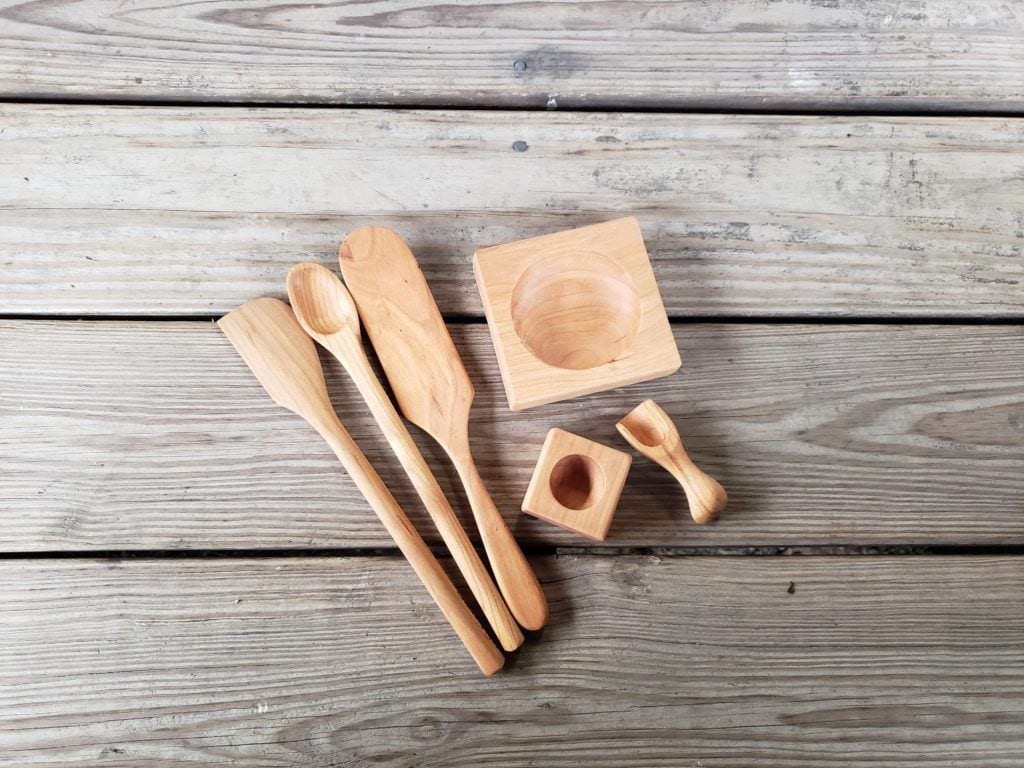
J.Q. Dickinson uses handmade wooden rakes to gently gather the salt crystals. The rake helps separate the salt from the remaining mineral-rich liquid, known as bittern, or “nigari.” That liquid is actually another interesting part of the process and can be used in other applications, including making tofu.
The tools themselves are part of the story. The wooden rakes are handcrafted from birch by Allegheny Treenware in Thornton, West Virginia another connection between the Salt-Works and Appalachian craftsmanship.
Here, even the tools used to harvest the salt reflect the same philosophy as the salt itself: simple, thoughtful, and made by hand.
Step 6: Let the Salt Dry
After the salt has been harvested, the crystals are scooped onto cotton cloths to dry.
This is another stage where time does the work.
There are no unnecessary additives or shortcuts. The Salt-Works relies on sunlight and mountain air throughout the process, creating a natural salt without additives or anti-caking agents. During the summer, salt can be harvested daily as conditions allow.
It’s easy to think of salt as something simple — something that just comes from a container on the kitchen counter. Seeing this part of the process changes that perspective. Each crystal has gone through a surprisingly long journey before it ever reaches a dinner table.
Step 7: From the Salt House to the Farm Office
Once the salt has finished drying, it isn’t transported across a massive industrial facility.
It is carried in small wagons back to the farm office.
There, the final steps are completed by hand. The salt is packaged, each jar is hand-labeled, batch-numbered, and sealed before making its way out into the world.
The entire journey happens on a small farm in Malden, just feet away from where the salt was harvested.
That proximity is part of what makes J.Q. Dickinson so special. The distance between the source and the finished product is incredibly small — but the history behind it stretches back hundreds of millions of years.
Step 8: See the Bigger Picture
A salt works tour at J.Q. Dickinson isn’t simply a lesson in how to make salt.
It’s a lesson in place.
The brine comes from beneath the Appalachian Mountains. The sun helps evaporate it. The mountain air helps dry it. Appalachian craftsmanship is reflected in the tools used to harvest it. And a seventh-generation salt-making family continues a tradition that has been part of the Kanawha Valley’s story for generations.
That connection to place is what makes the Salt-Works feel different from simply picking up a jar of specialty salt at a store.
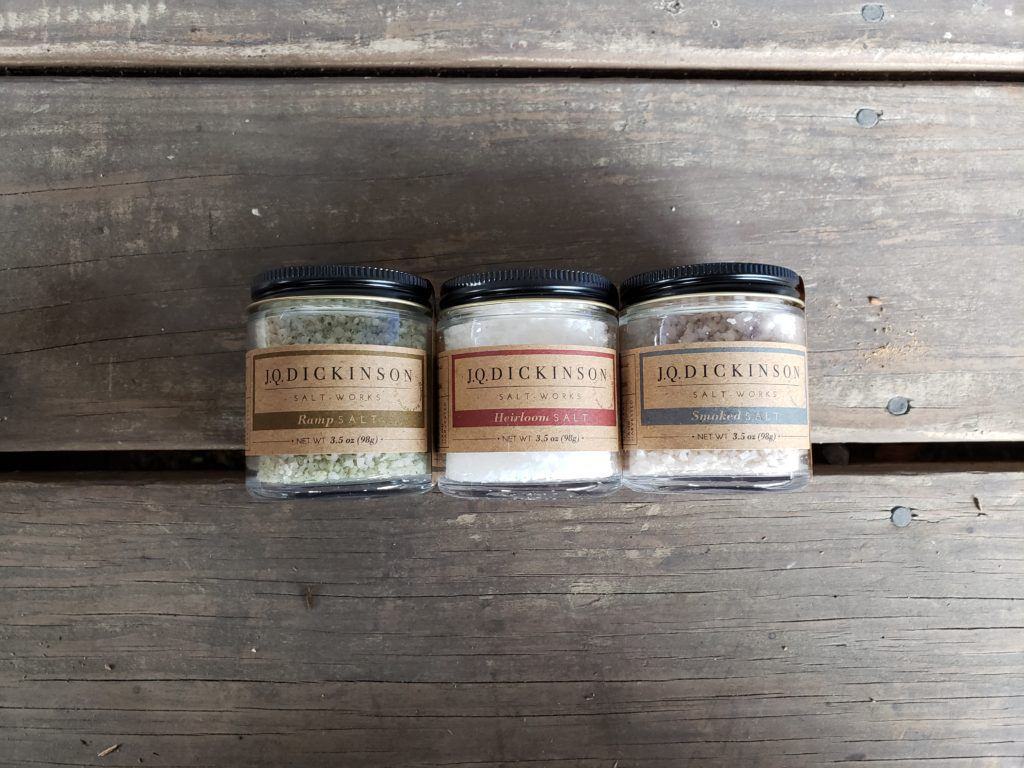
When J.Q. Dickinson calls its product “salt of the mountains,” it isn’t just a clever phrase. The salt is quite literally shaped by the land beneath the mountains, the environment around it, and the people who have chosen to carry the tradition forward.
Salt Works Tour: Come See Where the Salt Is Made
The next time you reach for a pinch of J.Q. Dickinson salt, remember that it began hundreds of feet beneath a farm in West Virginia.
It traveled from an ancient brine to a settling tank, from the settling tank to the sun houses, and from the evaporation beds to the crystallization beds. It was gently raked by hand, separated from the bittern, dried on cotton cloths, carried back to the farm office, and finally packaged and labeled — all within the same small operation.
That’s the story you get to experience when you visit J.Q. Dickinson Salt-Works.
You’re not just looking at where the salt is made.
You’re walking through its story.